Subtotal $0.00


Business Intelligence and Data Analytics (BIDA) equips students with the knowledge and practical skills to transform business data into meaningful insights for better decision-making. This transdisciplinary course integrates management, technology, statistics, and mathematics to prepare students for the challenges of today’s data-driven business environment and the Fourth Industrial Revolution (IR 4.0).
Students will learn to organise, analyse, visualise, and interpret data using spreadsheet-based analytical tools. Key areas include Microsoft Excel, data visualisation, PivotTables, descriptive analytics, probability distributions, regression analysis, forecasting, simulation, and data mining.
The course emphasises practical business applications and the interpretation of analytical results. By the end of the course, students will be able to communicate data-driven insights and recommend appropriate solutions to managerial problems.
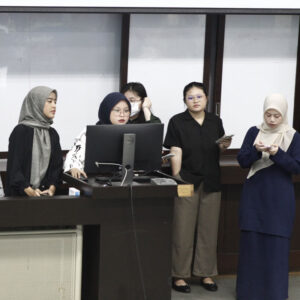
Teaching-learning and assessment strategy: Mixed method between teacher-centred and student-centred approaches. The assessment strategy is based on a combination of formative and summative assessments.

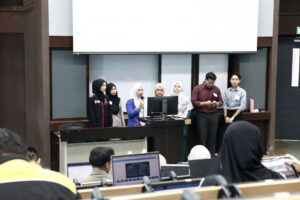
This course adopts a blended teaching and learning approach, combining teacher-centred instruction with student-centred learning. Lectures provide students with essential concepts, analytical frameworks, and step-by-step demonstrations, while practical activities encourage them to apply their knowledge to real-world business situations.
Students will actively participate through:
Guided lectures and demonstrations
Hands-on Microsoft Excel activities
Individual and group assignments
Business cases and problem-solving exercises
Data visualisation and analytical modelling
Class discussions and collaborative learning
Independent and online learning activities
The course emphasises learning by doing. Students will work with business datasets to organise, analyse, visualise, and interpret information before presenting evidence-based recommendations.
Assessment combines formative and summative methods. Formative assessment, including exercises, discussions, feedback, and quizzes, helps students monitor and improve their understanding throughout the course. Summative assessment, including individual and group assignments and the final assessment, evaluates students’ ability to apply analytical techniques, interpret results, and make appropriate business recommendations.
This methodology is designed to develop students’ analytical thinking, digital competency, teamwork, problem-solving ability, and confidence in making data-driven business decisions.
BPMNK2033 BIDA Website